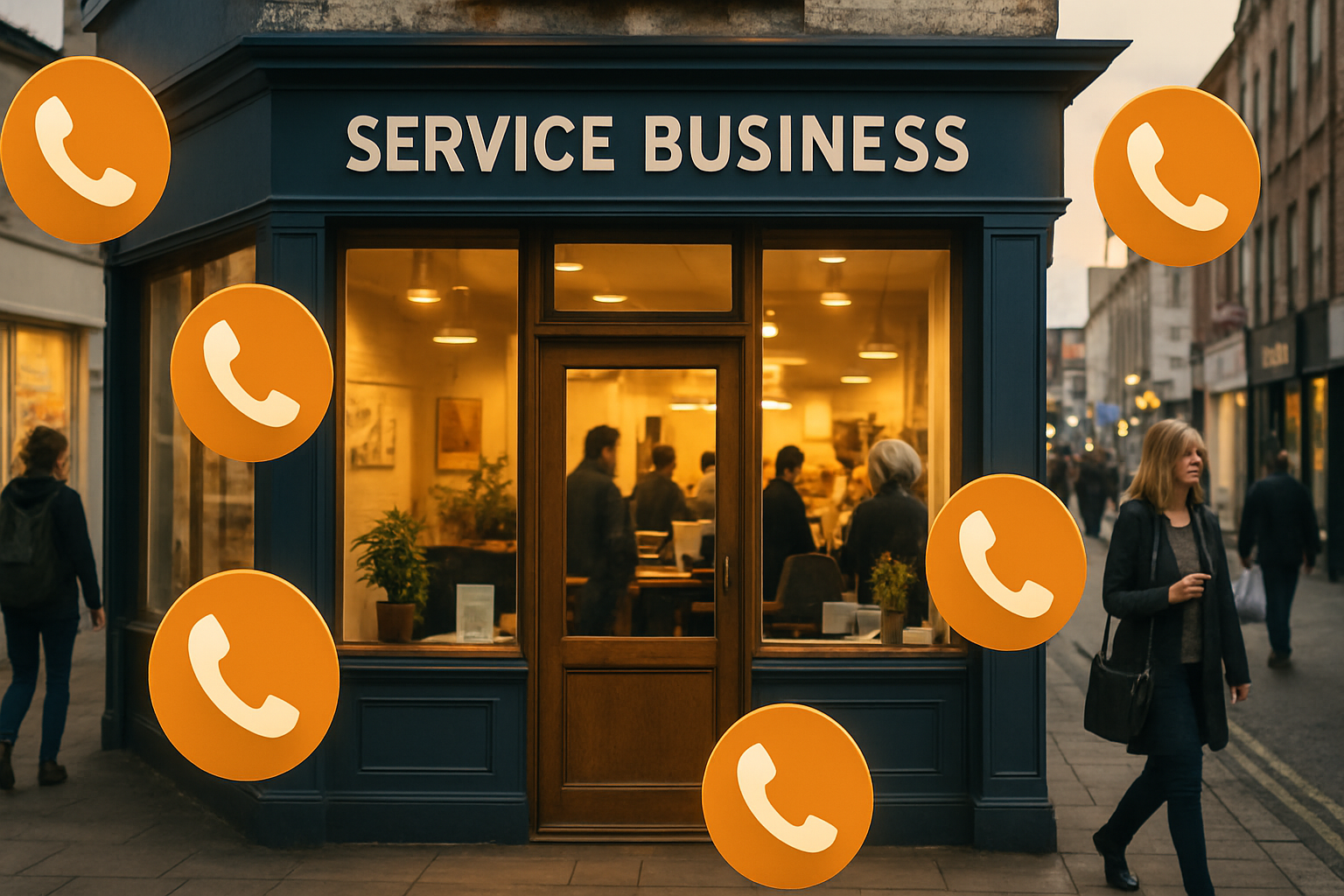
When your phones are ringing off the hook, every missed call is missed money. Whether it's a plumber in January, a restaurant on a Friday evening, or a trades business after a local ad drop, peak demand should be your best revenue moment. Instead, it's often where you lose the most. An AI voice agent for peak demand answers every single call, qualifies the enquiry, captures the details, and routes it to the right person. No hold music. No voicemail black hole. No customer hanging up and calling your competitor instead.
Quick answer
An AI voice agent picks up every inbound call instantly, even during your busiest periods or after hours. It greets the caller naturally, asks the right qualifying questions, logs the details into your systems, and alerts your team. You handle peak customer demand without hiring temporary staff or losing a single lead. Businesses using Voice AI call handling typically recover revenue they never even realised they were losing.
How much revenue are UK businesses actually losing to missed calls?
Research from BT and other UK telecoms providers consistently shows that around 85% of callers who can't get through won't try again. They'll simply move on to the next business in their search results.
For a small service business receiving 30 calls a day, missing even five of those during a busy lunchtime rush could mean losing two or three genuine leads. If your average job value is £200 to £500, that's potentially £1,000 or more walking out the door every single day during peak periods.
Multiply that across a busy week, month, or season, and the numbers become uncomfortable.
How AI voice agents handle peak call times
A well-configured AI voice agent works like your best receptionist, except it never takes a break, never calls in sick, and can handle multiple calls at the same time. Here's what actually happens when a call comes in during a peak period:
- Instant pickup. No ringing out. No engaged tone. The agent answers within a second or two, with a natural greeting tailored to your business.
- Qualifying questions. The agent asks what the caller needs, collects their name, contact details, location, and any specific requirements. This isn't a robotic script. Modern voice AI holds a genuine conversation.
- Smart routing. Urgent calls get flagged and forwarded to a team member immediately. Non-urgent enquiries are logged and queued for follow-up.
- Full record. Every call is captured with a transcript and summary. Nothing falls through the cracks.
The result? Your team deals with qualified, organised leads when they're ready, rather than scrambling to answer phones while also doing their actual jobs.
After-hours call capture: your 24/7 sales team
Peak demand doesn't always happen during office hours. A homeowner searching for an emergency plumber at 9pm. A customer wanting to book a table for Saturday while browsing on a Wednesday night. A business owner comparing quotes on a Sunday morning.
Without after-hours call capture, these callers hit voicemail. And most of them won't leave a message. They'll call someone who answers.
An AI voice agent works around the clock. It handles the call exactly as it would during business hours, qualifying the enquiry and making sure you have everything you need to follow up first thing the next morning. For many of the businesses we work with, after-hours calls account for 20 to 30 percent of their total inbound enquiries. That's a significant slice of revenue to leave on the table.
Call overflow management without the overhead
The traditional solution for handling peak demand is hiring more people. Temporary receptionists, overflow call centres, or simply asking your team to answer faster. All of these cost money, take time to set up, and introduce inconsistency.
AI voice agents handle call overflow management differently. They scale instantly. Whether you get 10 simultaneous calls or 100, the system handles each one with the same quality and speed. There's no recruitment, no training, and no awkward conversations when the busy period ends and you need to let someone go.
This is particularly useful for seasonal businesses. Think garden services in spring, accountants around tax deadlines, holiday lettings in summer. The demand spike is predictable, but staffing for it has always been expensive and messy.
What this looks like in practice
A heating engineer we worked with was missing around 40% of inbound calls during winter. His two-person team simply couldn't answer the phone while out on jobs. After setting up a Voice AI agent, every call was answered, qualified, and logged. Within the first month, he booked 15 additional jobs he would have previously lost. That paid for the system many times over.
You can read more examples like this in our case studies.
Common questions
Can AI voice agents really qualify leads, or do they just take messages?
Modern AI voice agents do far more than take messages. They hold natural conversations, ask qualifying questions specific to your business, capture detailed information, and route calls based on urgency or type. Think of it as an intelligent first conversation rather than an answering machine.
Will callers know they're speaking to an AI?
Most callers care about getting their problem addressed quickly and clearly. Today's voice AI sounds natural and conversational. Some callers may realise, but the feedback we consistently hear is that people appreciate getting an immediate, helpful response rather than ringing out or hitting voicemail.
Your next step
If you're heading into a busy period and you know calls are slipping through, it's worth seeing what an AI voice agent could recover for you. The setup is straightforward, the cost is a fraction of an extra hire, and you can have it running within days rather than weeks.
Get in touch with us and we'll walk you through how it would work for your specific business. No jargon, no pressure. Just a practical conversation about stopping the revenue leak.
Want this working in your business?
EngageAI builds practical AI systems for UK teams, from voice agents and workflow automation to reporting dashboards.